
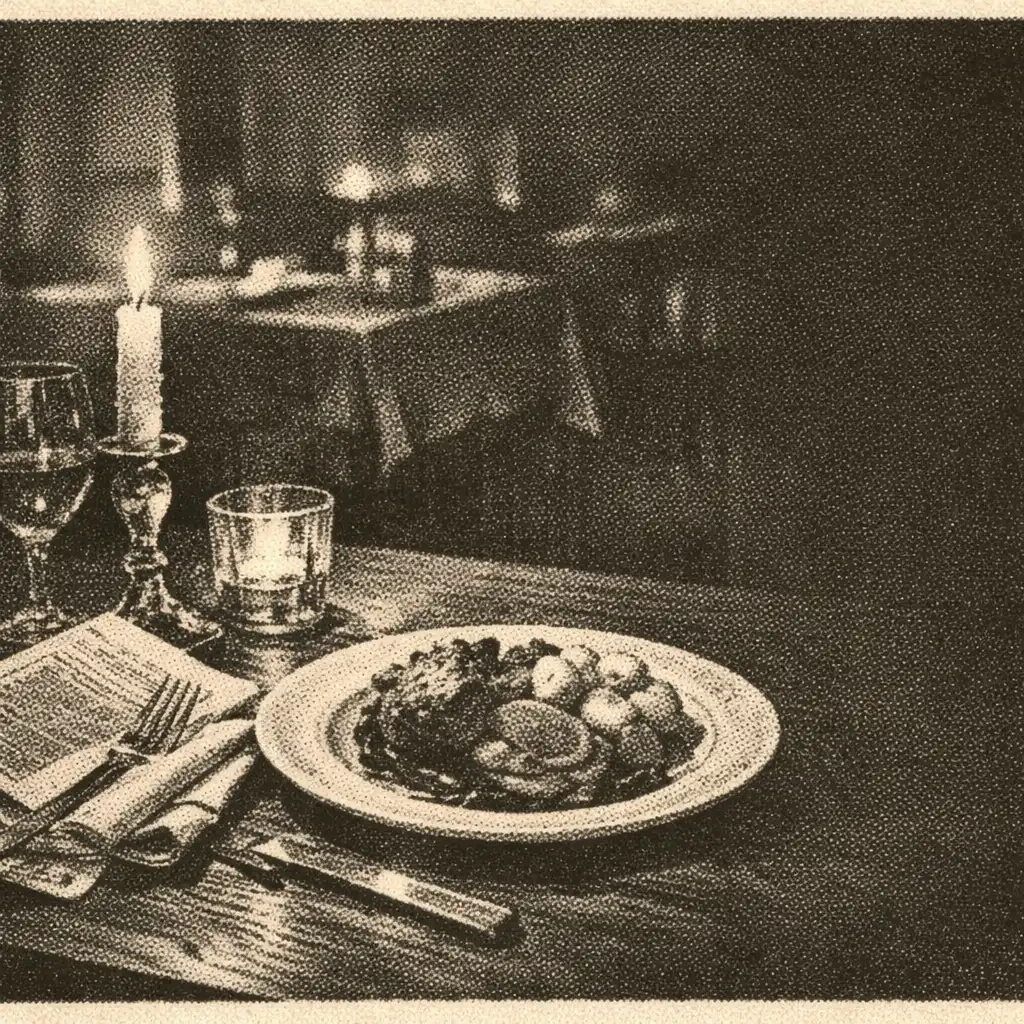
A meal at ASH & ONXY begins with the quieter business of settling in. Candlelight, paper at the table and the shared attention of companions make room for conversation before any later plan asks for concentration. Supper is not a waiting room for a poker night; it is an occasion with its own tempo, where an unhurried table can hold an entire evening. Dining tables are for plates, talk and pause. Poker tables, in the physical card lounge, are a separate setting where real cards become the focus.
Principal report · Dining room
The candlelit table is the evening’s first act
Margin report
The room changes register
As the later part of an evening takes shape, meal conversation may give way to a more purposeful kind of listening. In the card lounge, cards are handled at physical tables and attention is shared among those gathered there. Neither mode needs to become spectacle: one welcomes sociability, the other asks for it to be carried forward with care.
Kitchen file · Menu notes
Notes from the pass
01 · Evening note
A menu as an evening note
These dispatches record the spirit around a menu, not a fixed list of it. They are not a current menu, nor a catalogue of what may be available. Instead, they pay attention to timing, balance and the way a shared table can carry a conversation. The meal is allowed to be its own occasion: a sequence of attention, pauses and company rather than a preface that must hurry toward another room.
That distinction keeps the kitchen desk useful. It offers an account of atmosphere and ritual, while practical details belong with the relevant departments elsewhere in the paper.
02 · Table note
The shared-table rhythm
A considered meal gives a group time to find its conversational footing. Plates may be cleared, a thought may continue, and the evening can change register without anyone needing to race it. For guests who later join poker night gatherings, this rhythm can make the transition feel natural. Dining and card-lounge time are related chapters, not one blended activity; each can be taken seriously in its own right.
The kitchen desk therefore follows the social pace rather than a timetable. A table can be for catching up, for lingering over an idea, or simply for being together before a different kind of shared attention begins.
03 · Later-room note
Later-room restraint
Arriving at the physical card lounge after dinner can mean arriving composed and attentive. There, poker tables centre real cards, tabletop talk and the small rituals that keep a gathering legible to everyone around it. The value is not hurry but awareness: the dining room has offered conversation, while the later room asks that conversation meet the concentration of a shared table.
Dining room
Room report
Dining room correspondence
I
Arrival
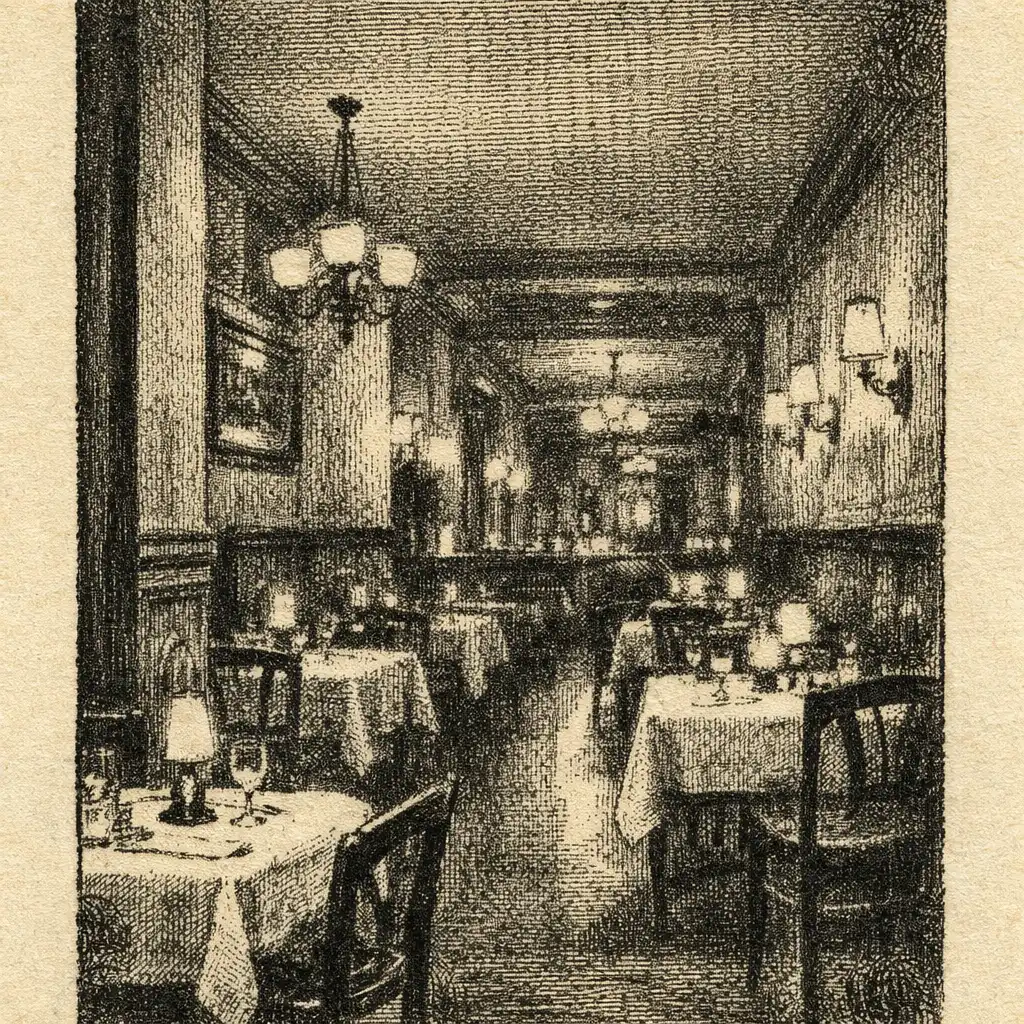
An evening can begin by gathering, reading the room and allowing the table to become familiar. There is no need to approach a poker table before the restaurant has had its own say. The card lounge is a later department of the visit, while the first exchange may simply be the calm hospitality of sitting down together.
II
Conversation
Dinner conversation can make a subsequent offline poker evening feel less formal without making it careless. In both spaces, table etiquette matters: people listen, leave room for one another and notice the pace already present. The dining room supports warmth; the card lounge asks that warmth to travel with attention.
III
The handover
The shift from restaurant table to card lounge is best understood as a respectful change of focus. Lower voices, attention to the host and awareness of the people around the table help mark it. Physical chips may sit among the tabletop details, but the larger point is shared space: poker tables are social places before they are anything else.
Feature correspondence
A supper before the cards
Dining stands on its own
A meal is a complete reason to visit ASH & ONXY, whether or not a guest later joins the card lounge. That is part of the useful distinction between the two rooms: the restaurant welcomes the full weight of an evening’s conversation, while the card lounge remains a separate setting for those interested in its later ritual. There is no need for dinner to perform as an introduction to anything else. It can simply be dinner, carefully inhabited.
The card lounge begins with attention
The physical card lounge is a place for real cards, shared poker tables and close listening. Texas Hold’em evenings are among the subjects recorded across this site, but this kitchen report concerns the transition in mood rather than any schedule or strategy. After dining, the change is one of focus, not spectacle: a group may carry its ease forward while recognising that the later table has its own concentration and its own social rhythm.
A social pace, not a rush
Allowing dinner conversation to settle before joining a poker night gathering keeps the evening generous to both experiences. Some visitors may dine and leave with the meal as their whole occasion; others may continue into the card lounge. In either case, awareness of companions and the room’s pace is the common thread. The shared table asks for consideration before it asks for anything more.
House correspondence · ASH & ONXY
Table margin · Shared-space notes
Rituals worth keeping
Small observations from the kitchen desk on making dining tables and later card-lounge tables comfortable places to share.
The table before the table
Finish a dining conversation with the same consideration brought to a later card-lounge table: make room, listen and avoid treating shared space as private territory. Restaurant manners and poker tables need not be official rules to be meaningful; both are improved by a warm awareness of the people sitting nearby.
Cards are handled, not displayed
At an offline poker table, physical cards and chips are objects of attention rather than display. Calm handling and a clear tabletop leave space for the gathering itself to breathe. This is a cultural note, not an enforcement notice: the smallest gestures can make a shared table easier for everyone to read.
Conversation finds its volume
Dining-room conversation can be generous and expansive, while a poker night asks for room awareness and attention to fellow players. The contrast is simple: social warmth does not disappear when concentration enters the scene. It adjusts its volume, leaving room for the table’s quieter exchanges.
Warmth travels best when it listens.
The host sets the tone
When moving from supper toward Texas Hold’em or other card-lounge occasions discussed across the site, take cues from the table host and the room’s pace. It is an editorial observation rather than a formal procedure, and it keeps the transition considerate. For fuller shared-table guidance, read Etiquette & Private Events.
Threshold report
The later room, reported from the threshold
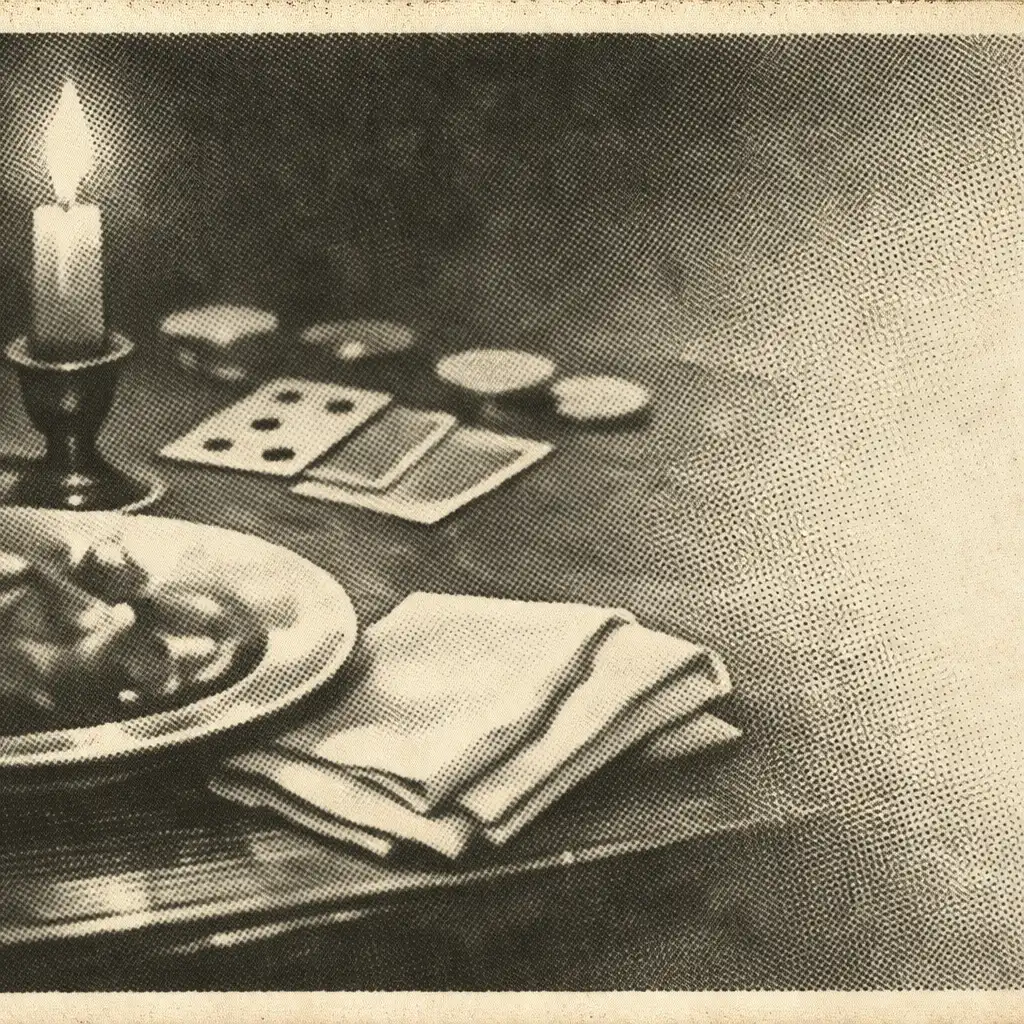
From the threshold, continuity is less about a claimed floor plan than a change in attention: dining light, a quieter concentration, real cards resting on a tabletop, and people gathering around poker tables. The cultural handover is deliberate but unforced. ASH & ONXY presents dining followed by real offline poker in a physical card lounge, and this plate records the mood between those departments rather than a live event or a result.
Kitchen File No. 12 · Source: Kitchen Desk
This visual dispatch continues in Card-Lounge Reports & Offline Poker.
Kitchen index · Continue the report
The Kitchen Index
Card-Lounge Reports & Offline Poker
Continue the report for fuller context on offline poker, poker tables and Texas Hold’em evenings. This kitchen desk records the supper chapter; the dedicated department follows the later room in greater detail.
Etiquette & Private Events
For shared-table guidance or reading around a private gathering, continue to the etiquette and private-events department, where dining, table ritual and the idea of a private table receive their own correspondence.
The Society Column
Continue into the broader social chronicle for observations on gatherings and the cultural side of a poker night, told without invented guest stories or a need to turn company into spectacle.
Kitchen desk · Closing note
The shared table, in two chapters
The restaurant’s candlelit pace and the later card lounge are linked by attention to the shared table. One is for supper and conversation; the other is for real offline poker and considerate play. At ASH & ONXY, neither chapter needs to rush the other. The kitchen dispatches close with that simple record: a meal can stand on its own, and a later card-lounge ritual can begin with the same care.
The Kitchen Desk, ASH & ONXY